Looking for your first investment property in Cleveland but not sure where to start? You are not alone. Cleveland and Cuyahoga County offer real entry points for beginners, but the best path depends on location, numbers, and a few local rules you cannot ignore. In this guide, you will learn where new investors actually find deals, how to run simple cash flow math, and what to check before you buy. Let’s dive in.
Start in the right market slice
City vs. county price lines
Cleveland city prices are typically much lower than the surrounding suburbs. Recent reporting shows a Cleveland city median sale price around $100,000 to $115,000. In wider Cuyahoga County, medians have trended near $200,000 to $210,000 in recent months. That gap shapes where beginners find entry deals. Lower city price points can help you get in the game, while suburban assets may offer steadier condition and different tenant profiles.
Rents and what they mean
Cleveland’s average apartment rent is about $1,575 as of March 2026, and neighborhood averages vary widely across the city. Higher-amenity areas like Tremont, Ohio City, and University Circle often run above $2,000, while many east and west side neighborhoods sit below the city average. Use neighborhood data from the Cleveland rent trends page when you model cash flow. A single citywide number can mislead you.
Property types beginners choose
Single-family rentals
Single-family rentals are the simplest path for many first-timers. They are common across Cleveland and easier to finance as long-term rentals. In the city, entry prices vary with condition and block. In suburbs, prices tend to trend closer to county medians. If you want a turn-key rental, target clean inspections and recent updates, then price your offer using real local rent comps.
Duplex to fourplex house-hacks
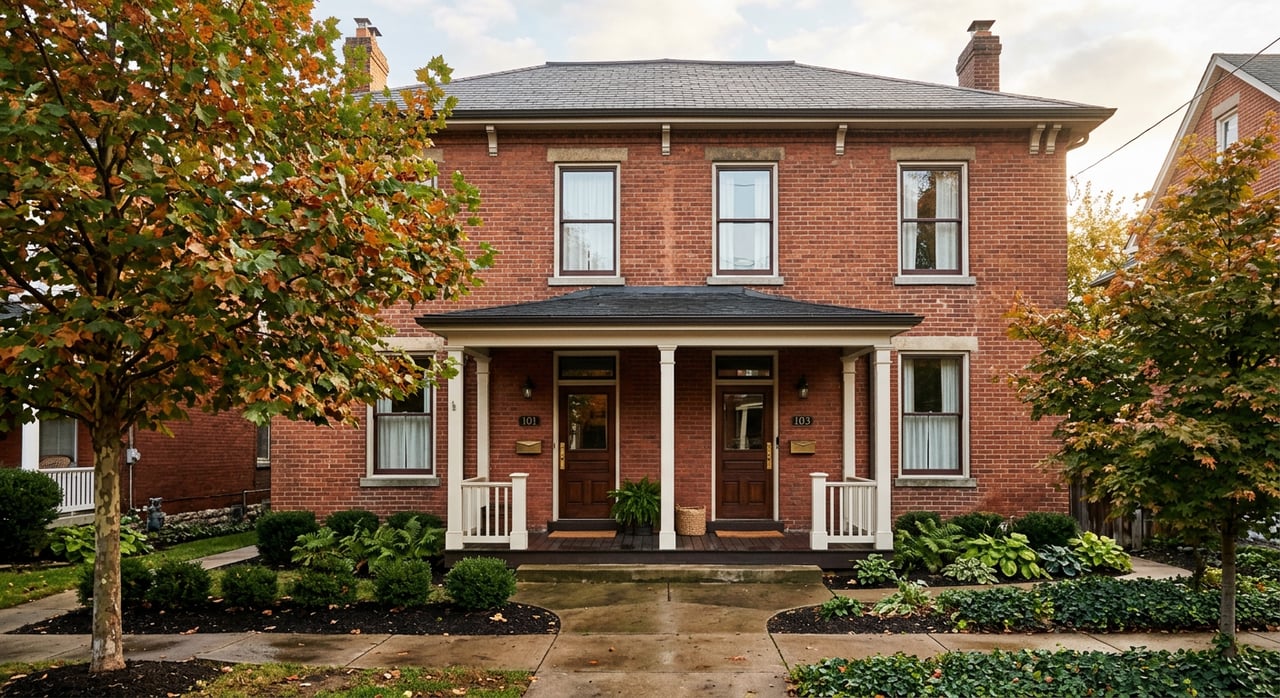
Two to four units can be a strong starter strategy, especially if you plan to live in one unit. Owner-occupant loans often allow lower down payments. Price per building and per door varies by neighborhood and condition. Thicker-demand areas like Tremont and Ohio City tend to list higher, while older stock in transition areas can be more affordable but may need more rehab and careful screening.
Small multifamily, if you are ready
Properties with five to twenty units can deliver scale, but they require more capital, tighter operations, and consistent code compliance. If you are new to landlording, start smaller, then step up once your systems are in place.
Neighborhood examples and tradeoffs
Higher-amenity pockets
Neighborhoods such as Tremont, Ohio City, and University Circle are examples of areas where rents and resale values are higher. The Cleveland rent trends page lists neighborhood averages and shows how these pockets often exceed the city’s overall rent. Expect stronger tenant demand and updated housing, but also higher entry prices and more competition.
Value-focused entry areas
If you are seeking lower purchase prices, look at value neighborhoods that are seeing ongoing investment. Slavic Village, for instance, has drawn investor attention due to pricing dynamics in ZIP 44105. You can review sales snapshots by ZIP on resources like Prop-Metrics for 44105. In these areas, budget for repairs and lead-safe work if the home predates 1978, and rely on block-level rent comps, not citywide averages.
Simple cash-flow math you can copy
Key formulas
- Gross annual rent = monthly rent × 12.
- Effective gross income (EGI) = gross rent − vacancy allowance.
- Net operating income (NOI) = EGI − operating expenses (excludes mortgage principal and interest).
- Cap rate = NOI ÷ purchase price.
- Cash-on-cash return = (annual pre-tax cash flow after debt service) ÷ (cash invested at closing).
Use practical assumptions: vacancy 5 to 10 percent; operating expenses 30 to 50 percent of gross rent depending on age and utilities; property management 8 to 12 percent of collected rent if outsourced. Adjust with local tax and insurance quotes.
Example A: $100k single-family in city
- Purchase price: $100,000.
- Market rent: $1,155 per month based on a central Cleveland neighborhood average from the Cleveland rent trends page. Gross annual rent: $13,860.
- Vacancy at 8 percent gives EGI ≈ $12,751.
- Operating expenses at 40 percent of EGI ≈ $5,100, so NOI ≈ $7,650.
- Cap rate ≈ 7.6 percent ($7,650 ÷ $100,000) before financing.
This quick, lender-neutral screen helps you compare options.
Example B: Two-unit scenario
- Purchase price: $180,000.
- Combined rents: $1,200 + $1,000 = $2,200 per month. Gross annual rent: $26,400.
- Vacancy at 8 percent gives EGI ≈ $24,288.
- Operating expenses at 35 percent ≈ $8,500, so NOI ≈ $15,788.
- Cap rate ≈ 8.8 percent.
Cash-on-cash return will depend on your down payment, interest rate, and closing costs. If you plan to occupy one unit, explore options like FHA, which allows owner-occupants to finance 1 to 4 units. FHA’s 203(k) program can also bundle purchase and rehab into a single loan for qualifying buyers.
Rules and steps that can block a deal
Cleveland rental registration
Cleveland requires most non-owner-occupied residential units to complete rental registration and obtain a Certificate Approving Rental Occupancy. The city’s Residents First program also outlines documentation, fees, and a Local Agent-in-Charge requirement for many out-of-county owners. Review the current process and forms on the City of Cleveland rental properties page before you write an offer.
Lead safety for pre-1978 homes
Many Cleveland homes were built before 1978. Federal law requires lead-based paint disclosure for pre-1978 housing, and specific renovation rules apply when you disturb painted surfaces. Read the HUD guidance on the Lead-Based Paint Disclosure Rule and plan for certified contractors and lead-safe work practices as needed. For renovation compliance, EPA’s Renovation, Repair and Painting (RRP) rules may also apply.
Property taxes and modeling
Cuyahoga County’s effective property taxes vary by municipality and levy mix. A practical modeling range is often 1.5 to 3 percent of market value annually, but you should price check by community. Use the county’s tax rates by community resource while you underwrite a property.
Where to actually find deals
MLS with a local agent
For most beginners, the MLS is still the most reliable place to start. You will get transparency on comps and the option to use conventional or owner-occupant financing. Work with an agent who understands 2 to 4 unit financing and Cleveland’s rental registration steps so your deal closes cleanly and is rentable on day one.
Targeted programs and land banks
Some entry-level projects come through public or nonprofit channels. The Cuyahoga Land Bank posts properties that need renovation. If you have a rehab plan, review the Land Bank renovation listings. These routes can be lower cost to acquire, but they require capacity to manage construction and code compliance.
Other channels to vet carefully
- Bank-owned and foreclosure auctions can offer discounts, with title and condition risks that need extra diligence.
- Off-market deals from wholesalers or local investor groups can surface leads. Verify condition, run your own comps, and insist on clear title and realistic rehab bids.
Quick due-diligence checklist
- Verify taxes and estimate future bills using county resources like tax rates by community. Look for delinquencies or special assessments.
- Pull rent comps at the neighborhood level using the Cleveland rent trends page and recent MLS leases.
- Order full inspections for structure, roof, electrical, plumbing, and HVAC.
- If pre-1978, plan for lead-safe work and certifications. See HUD’s lead disclosure rules and the EPA RRP program guidance.
- Confirm Cleveland’s rental registration steps and documentation using the Residents First rental properties page.
- Check whether a suburb requires a point-of-sale inspection or occupancy certificate. A local summary like this point-of-sale inspection overview helps you plan your timeline and costs.
Red flags to catch early
- Unpaid or high property taxes. Use county resources to estimate the true annual cost and spot past-due balances.
- Open code violations or pending enforcement. Ask the seller for documents and contact the municipal housing office to confirm status.
- Lead-safe mandates or major rehab. For older housing, plan for certified work and realistic contractor bids.
Ready to start?
If you are new to investing, a focused search with clear numbers is your edge. Start by choosing your market slice, confirm neighborhood rents, and run simple NOI math before you ever write an offer. Then build your plan around local rules so your property is rentable and compliant from day one.
When you are ready, partner with a local team that understands both owner-occupant and investor paths, from MLS sourcing to rental registration steps. Reach out to the Legacy Clover Team for a friendly, no-pressure conversation about your first Cleveland investment.
FAQs
What are typical first-time investor price points in Cleveland city vs. Cuyahoga County?
- Cleveland city’s median sale price has been around $100,000 to $115,000, while Cuyahoga County’s median has hovered near $200,000 to $210,000. These ranges help set realistic entry budgets.
How do I estimate rent for a specific Cleveland neighborhood?
- Start with the neighborhood averages on the Cleveland rent trends page, then refine with recent nearby leases and your property’s condition and bedroom count.
Can I use FHA to buy a duplex in Cleveland and live in one unit?
- Yes, owner-occupant buyers can often use FHA for 1 to 4 unit properties, and FHA’s 203(k) program can finance purchase plus rehab for qualifying borrowers.
What local landlord rules should I know before buying in Cleveland?
- Most rentals must complete city rental registration and secure a Certificate Approving Rental Occupancy. Review steps and documents on the Residents First rental properties page and plan for lead-safe requirements for pre-1978 homes.
How should I budget property taxes for cash flow in Cuyahoga County?
- A practical estimate is 1.5 to 3 percent of market value annually, but rates vary by municipality. Check the county’s tax rates by community during underwriting.